Unparalleled Access to Ancient, Medieval, and Pre-Modern History and Literature
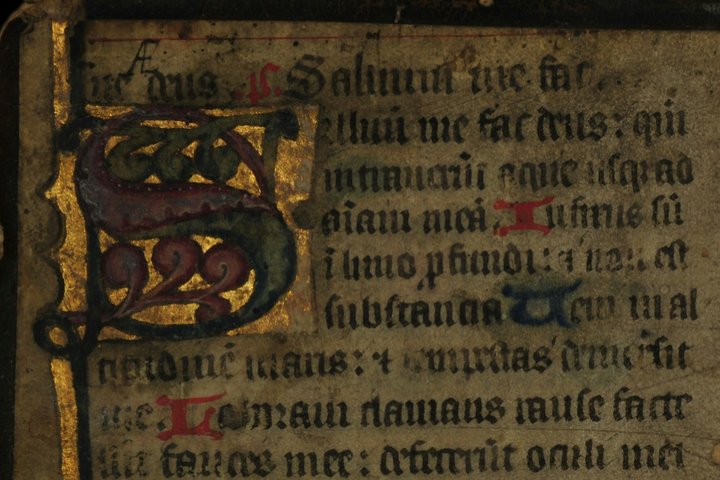
The sixth (and last) reason to study Latin is in my mind the most persuasive argument of all. For most of the past two millennia (up until the 19th century) Latin was the common language of the literate West and so of the majority of literature and academic writing. Serious students of Latin (for obvious reasons) have unique access to this vital period of world literature — a period too often ignored by modern education. Obviously, it’s possible to read all these works in translation, but is it the same? I would argue it isn’t. In fact, decades of experience with the language have shown me that students of Latin generally get far more out of Latin literature than other readers, developing insights into the texts that non-Latinists can never have. There’s also the issue of exposure — most students read a very limited selection of literature in school, almost none of it Latin literature. And since standard required reading in the English-speaking world skews heavily toward English-language texts and works of the 19th and 20th centuries, the average student is left with an enormous blind spot in his or her overall education. To me this is a tremendous shame since students can’t possibly develop an honest understanding of the modern world if they haven’t already developed a solid understanding of the ancient, medieval, and early-modern periods. A student who is never exposed to writers like Pliny, Virgil, Bede, or Aquinas loses that valuable perspective and, perhaps even more unfortunate, won’t even know it’s missing!
History
An oft-repeated quotation (frequently attributed to Mark Twain) is “History doesn’t repeat itself, but it often rhymes.” This is (I think) an important insight, so important that it merits some serious attention and analysis. Every student of history knows that, while historical events reflect their particular period and the circumstances of the time, there are also often key parallels linking different times and places, which the educated observer can use to see the patterns of humanity and civilization and so better understand contemporary events. A person without at least a minimal grasp of the vast span of known history is navigating the modern world without a paddle (and I’m not convinced this is an accident).
While there are definite patterns and common themes to history, they aren’t generally evident over just a century or two. The waves of history — the rise and fall of civilizations, technology, and learning — happen over millennia, and so people whose perspective on history goes back no more than a couple hundred years will necessarily suffer from serious historical myopia. Most intelligent people strive to understand the contemporary world better, and the actions and decisions of the people who run it. But this is almost impossible without a broad perspective — one that spans thousands of years. The truly crucial parallels to the world empires and global events of our day don’t appear in recent history. In fact, the student will HAVE to go back as far as Rome or ancient China, the Aztecs and the Inca, or even back to the Sumerians and the Akkadians in order to see them. Without this long-term view the overall events of the contemporary world often appear accidental and unpredictable. Those with a broad grasp of human history, though, are able not just to understand and (to a certain extent) predict the twists and turns of current history, but even respond to them.
Advanced Latin students are exposed to a wide range of Latin historical literature and for this reason in a far better position to understand the civilization that parallels our own more than any other — the Roman Empire. Most people’s understanding of Rome is vague at best. They’ve heard of it, obviously, along with major historical figures like Julius and Augustus Caesar, and perhaps even Pompey or Marc Antony, but everything beyond that — the actual events and convolutions of the civilization and its history — are a complete blank. This, in my mind, is a genuine tragedy. We can’t possibly begin to understand how modern-day empires work without a clear understanding of the ancient empire that we know the most about AND most closely parallels the one we live inside of today. In a similar way it’s impossible to predict the probable aftermath and consequences of our own civilization without a comprehensive understanding of the millennium or so in between the Roman Empire and the current Western Empire, a period of time encompassing the medieval and early-modern periods.
The one group of students, of course, with real access to the literature of the ancient, medieval, and pre-modern periods and so in the best position to understand these periods are Latin students. They’ve read Caesar and Livy, Suetonius and Bede, historians recording the events and personalities of the Roman and post-Roman eras. Most students, though, never read these historians (even in translation) or any of the many other important historians of these periods. It’s clear to me that, if you want your student to understand ancient and medieval history (and I think you should), the best way to make that happen is through serious study of the Latin language.
Poetry and Fictional Prose
To most students the many centuries of pre-modern poetry and fictional prose are (like the history of that time) a complete blank. The earliest literature most students ever read is Shakespeare (or perhaps Beowulf if they’re lucky). The majority of students aren’t even exposed to Homer or Dante. In fact, most poetry and literary prose that students do read comes out of the nineteenth and twentieth centuries (probably 90% or more), and almost none of it is pre-Shakespearean. To me this is beyond unfortunate, and I would argue that it may constitute a genuine crisis! Poetry and fictional prose, at their best, express the human experience in a way history can’t ever hope to. It isn’t an exaggeration to say that fiction is just as important as historical writing for understanding a period of history and the people who lived through that history. In fact, poetry and fictional prose (contrary to people’s general idea of what “fiction” means) can provide a far clearer picture of a time and place than any historian ever could. Most people’s concept of Victorian England, for example, comes directly from Charles Dickens and Thomas Hardy, not from any historian of the period.
In the same way, students can’t possibly develop an understanding of earlier historical periods, of their context and mores, without reading the great fictional prose and poetry of those periods. Just as we read William Faulkner to understand the postbellum American South, we should all be reading Catullus and Virgil to better understand first-century-B.C. Rome. If we want to approximate the experience of people living in the 1st and 2nd-century-A.D. Roman Empire, then in addition to the historians, we should be reading Petronius, Juvenal, and Apuleius. And to get a sense of 11th and 12th-century Europe we should read Geoffrey of Monmouth, Bernardus Silvestris, and Peter Abelard. Unfortunately, most students have not only never read any of these writers — they likely haven’t even heard of them! Latin students, of course, are a notable exception. A student who’s reached an advanced level in the language WILL read many (if not most) of these authors and in this way gain an understanding of these specific periods of history that he or she would otherwise never have access to.
Philosophy
Despite its being almost completely ignored in primary and secondary-school curriculum, and far too small a part of college-level core curriculum, philosophy is a vital discipline, one that every educated person should receive (at the very least) a minimal education in. In fact, it’s essential to develop an understanding of the philosophers of a period and place if we want to grasp what that period and place is all about. Philosophers reflect the age in which they live, on the one hand adapting their philosophy to the context and needs of the period and on the other influencing the zeitgeist of that particular period in myriad ways. Lucretius, for example, provides insights into the cultural context of the early Roman Empire that no historian could hope to communicate. In the same way, we can’t begin to understand medieval thinking without reading Aquinas, or the intellectual milieu of the pre-modern period without Descartes, Spinoza, or Leibniz. Of course, all of these philosophers wrote in Latin, and like the historians, poets, and fictional prose writers listed above, few students will have the breadth and depth of exposure to these philosophers that the advanced Latin student has.
Math and Science
I’m starting to sound like a broken record, I know, but the same argument that I’ve applied to Latin-language historians, poets, fiction prose writers, and philosophers can be applied just as easily to mathematicians and scientists. An age’s technology and overall understanding of the universe is reflected in its science and math. You simply cannot understand the pre-modern period in any meaningful way without knowing something about Newton, Euler, and Descartes. Or the Middle Ages without learning about Roger Bacon or Fibonacci. Or the ancient world without some knowledge of Celsus, Vitruvius, or Boethius. Again, the students with the greatest access and exposure to these thinkers are Latin students.
Latin Is Access to the World!
By now (I think) my thesis should be clear — you can’t possibly understand the events and cultural context of an age without reading the important writers of that age, whether they’re historians, poets, fictional prose writers, philosophers, mathematicians, or scientists. And since the majority of the scholars and artists of Ancient Rome and medieval Europe and a large minority of those in pre-modern Europe wrote in Latin, there’s no group of students with better access to and a clearer understanding of their works than Latin students. If you want to understand the world and your place in it, then study Latin!
Check out the main article in this series: Why Study Latin?